Families of MMIWG2S+ victims pen letter to PM, including late Sonya Cywink鈥檚 story
Meggie Cywink and other families of MMIWG2S+ victims are demanding direct oversight and audits of federal funding. They argue that large organizations fail to support families doing the actual work.
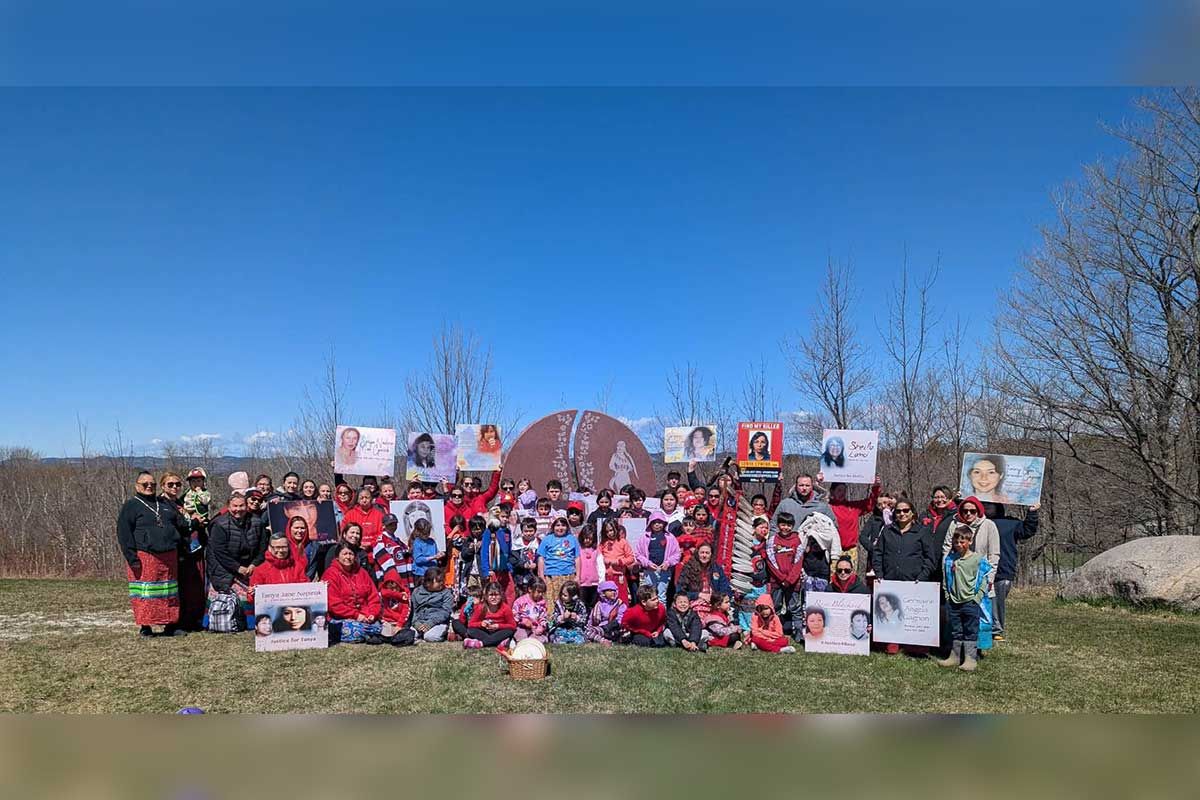
On Red Dress Day, community members gather at the monument to MMIWG2S+in Whitefish River 91成人导航 holding placards commemorating Sonya Nadine Cywink.
On Red Dress Day, community members gather at the monument to MMIWG2S+in Whitefish River 91成人导航 holding placards commemorating Sonya Nadine Cywink.
CANADA鈥擳here is a moment in conversation with Meggie Cywink where her voice changes.
Not louder. Not angrier.
Just tired in the way granite is tired after carrying winter for centuries.
鈥淔amilies are no longer asking to be consulted as an afterthought,鈥� she said quietly. 鈥淔amilies are asking to lead.鈥�
For more than three decades, Ms. Cywink has carried the unresolved murder of her sister, Sonya Nadine Mae Cywink, like a stone in her chest.
In August of 1994, Sonya Cywink, a 31-year-old pregnant mother from Whitefish River 91成人导航, disappeared from London. Days later, her body was discovered near the Southwold Earthworks in Elgin County. Her murder remains unsolved. Thirty-one years later, Meggie Cywink is still searching. Not only for answers in her sister鈥檚 case, but for the deeper architecture beneath it all, the systems, institutions and cycles of violence she believes continue feeding Canada鈥檚 ongoing MMIWG2S+ crisis.
This story brought to you by the sponsor above.
Now she and dozens of families across the country are openly challenging another layer of that system: the national organizations funded in the name of Missing and Murdered Indigenous Women, Girls and Two-Spirit people.
In an April 30 open letter addressed to Prime Minister Mark Carney, federal ministers and opposition leaders, families connected to some of Canada鈥檚 most painful unsolved cases are demanding audits, accountability and direct family-led oversight of federal MMIWG2S+ funding.
鈥淲e are writing to say they do not speak for us,鈥� the letter states of several federally funded organizations. Among those named are the Native Women鈥檚 Association of Canada, the National Family and Survivors Circle, Les Femmes Michif Otipemisiwak and Giganawenimaanaanig.
The signatories include relatives of women such as Amber Tuccaro, Maisy Odjick and Sonya Cywink.
The letter argues millions in federal dollars have flowed into organizations while many families continue struggling alone, searching for loved ones with little direct support.
鈥淭here are families who can鈥檛 even afford gas money to keep searching,鈥� Ms. Cywink said during an interview with The Expositor. 鈥淢eanwhile millions of dollars are moving through organizations and families still don鈥檛 know where that money鈥檚 going.鈥�
She pointed specifically to concerns surrounding the National Family and Survivors Circle.
鈥淎 friend of mine discovered they received over seven million dollars,鈥� she said. 鈥淎nd now they鈥檙e receiving more funding again. Families want accountability. That鈥檚 not unreasonable.鈥�
The letter calls for a forensic audit into how federal MMIWG2S+ funding has been used.
For Ms. Cywink, the frustration is not simply financial, it is philosophical.
Again and again during the conversation, she returned to one central concern: colonial policy regarding 91成人导航s women鈥檚 struggles.
鈥淭hese organizations say they鈥檙e national,鈥� she said. 鈥淏ut Indigenous women aren鈥檛 voting for these people. Families don鈥檛 understand how they get into those positions.鈥�
She contrasted that structure with traditional clan-based governance systems rooted in collective responsibility rather than centralized authority. 鈥淲hen you follow the clan system, everybody has responsibility,鈥� she said. 鈥淓verybody is supposed to help each other. When you create hierarchy, power gets concentrated. And that can become dangerous.鈥�
The conversation drifted far beyond policy language and government terminology. It moved into deeper waters, grief, exploitation, lateral violence, trauma and the uneasy relationship between colonial systems and nonprofit structures attempting to address colonial harm.
Ms. Cywink spoke candidly about what she views as a growing profiting surrounding Indigenous suffering.
鈥淭he issue before Canada is no longer awareness,鈥� the letter states. 鈥淔amilies have watched substantial federal investments flow into organizational structures while many of the people most directly impacted continue to receive little or no direct support.鈥�
That sentence hangs heavy because awareness has already come.
Canada held the National Inquiry into Missing and Murdered Indigenous Women and Girls. It produced 231 Calls for Justice. It generated headlines, reports, panels, consultations and commitments. Yet Indigenous women continue disappearing.
Meanwhile, she says, families continue carrying the actual work.
For years, Ms. Cywink has been building her own database documenting cases of missing and murdered Indigenous people. It now contains more than 2,100 entries dating back centuries.
And inside those numbers, she says, patterns begin revealing themselves.
鈥淵ou see residential school survivors. Child welfare involvement. Foster care. Adoption. Trafficking vulnerabilities. Poverty,鈥� she said. 鈥淎fter enough cases, patterns emerge over and over again.鈥�
If prevention is ever going to become real, she argues, those patterns must be confronted honestly. 鈥淚f we don鈥檛 understand the patterns, there鈥檚 no way to prevent the missing and murders.鈥�
At times during the conversation, Ms. Cywink鈥檚 words moved from analysis into something more intimate and painful. She spoke about Indigenous youth leaving remote communities for urban centres like Thunder Bay, Ottawa and London to attend school.
鈥淧redators can spot vulnerable people a mile away,鈥� she said. 鈥淭hey know exactly who to target.鈥�
Human trafficking, addiction and homelessness are not isolated crises, she explained, but interconnected outcomes of long-standing systemic violence. 鈥淚t鈥檚 all connected,鈥� she said. 鈥淩esidential schools. Child welfare. Poverty. Trauma. Addiction. Missing women. None of these things happen separately.鈥�
Still, amid the heaviness, Ms. Cywink repeatedly returned to children. To prevention. To hope.
Earlier this month she joined students at Birch Island during a MMIWG2S+ awareness walk where children carried eagle staffs and wore handmade red dresses through the community.
This story brought to you by the sponsor above.
鈥淭his is action,鈥� she said. 鈥淲e are beyond awareness now.鈥� The phrase surfaced repeatedly.
Beyond awareness. Because after decades of inquiries and reports, Ms. Cywink says Canada can no longer pretend it simply does not know. 鈥淚f people still don鈥檛 know,鈥� she said, 鈥渢hey have their heads buried in the sand.鈥�
But she also acknowledged many survivors avoid confronting the crisis because it reopens wounds of their own. 鈥淚t turns something up inside people,鈥� she said softly. 鈥淎 lot of people are survivors too.鈥�
Toward the end of the conversation, Ms. Cywink reflected on how tightly interwoven Indigenous communities remain across the country.
鈥淭he Indigenous world is so small,鈥� she said. 鈥淓verybody knows somebody connected to somebody.鈥�
That intimacy changes the nature of grief. These are not distant tragedies occurring in abstraction. They are cousins, sisters, friends, roommates, aunties, daughters.
And after 31 years, Ms. Cywink has stopped waiting for institutions to carry the weight alone.
Families, she says, are ready to carry it themselves. 鈥淲e want to direct the funding,鈥� the open letter states. 鈥淲e want to address the issues we know are continuing. We want to create deep and sustainable prevention measures.鈥�
LJI (Local Journalism Initiative)This article funded by the Government of Canada
Share this article
The link has been copied!
Members Discussion
Your link has expired. Please request a new one.
Your link has expired. Please request a new one.
Your link has expired. Please request a new one.
Great! You've successfully signed up.
Great! You've successfully signed up.
Welcome back! You've successfully signed in.
Success! You now have access to additional content.