Wiikwemkoong鈥檚 new drug strategy sparks debate on safety, healing and community
Wiikwemkoong leadership announced that serious offenders face a two-year removal from the territory to combat drug violence. While aimed at safety, some worry it risks further displacing vulnerable members.
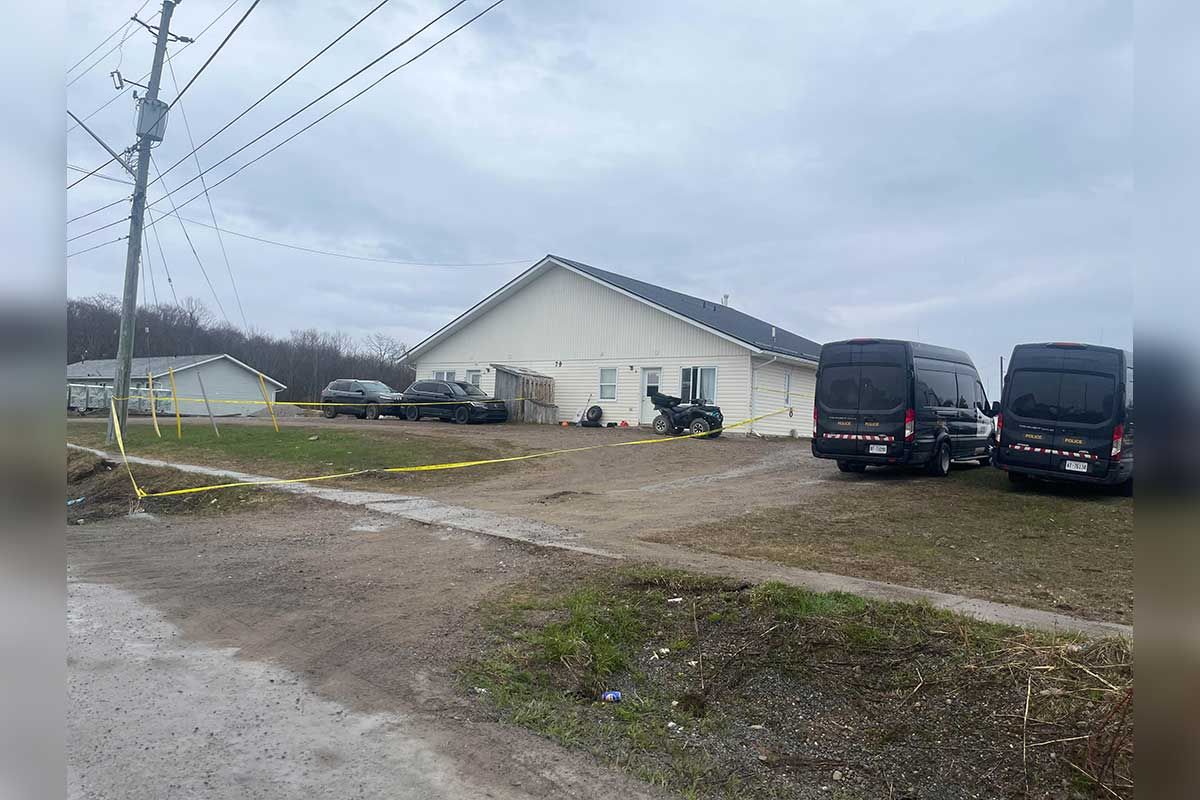
Yellow police tape cordons off the residence where a shooting occurred on May 3 in the Bayview Heights area of Wiikwemkoong.
Yellow police tape cordons off the residence where a shooting occurred on May 3 in the Bayview Heights area of Wiikwemkoong.
WIIKWEMKOONG鈥擳he sound that echoed through Wiikwemkoong Unceded Territory last week was more than gunfire. It was the sound of a community reaching a breaking point.
Following a recent shooting and amid what leadership described as escalating drug-related violence, Ogimaa Tim Ominika announced a sweeping new approach aimed at people involved in serious drug trafficking, weapons offences, intimidation and violence within the community鈥攐ne that includes the conditional removal of offenders from Wiikwemkoong for a minimum period of two years.
Standing alongside members of council and Wikwemikong Tribal Police Service Chief of Police Ron Gignac, Ogimaa Ominika spoke with the bluntness of a leader staring directly into a crisis that has already hollowed out too many Northern communities.
鈥淲e cannot treat that as normal,鈥� Ogimaa Ominika said of the shooting. 鈥淲e cannot separate it from drugs, the weapons, the dealers, intimidation and the fear that many of our families have been carrying.鈥�
Under the measures announced, individuals connected to serious drug trafficking, firearms offences, violent conduct, intimidation or exploitation could face removal from the community and be prevented from returning unless they meet what council described as strict rehabilitation conditions. Those conditions may include treatment, proof of sobriety, employment or training plans, community service and demonstrated accountability.
鈥淭he harm has been serious,鈥� the Ogimaa said. 鈥淭he response must be serious too.鈥�
The announcement lands in a region already deeply scarred by the toxic drug crisis. Across Northern Ontario, and particularly within remote and isolated 91成人导航s, communities have spent years confronting waves of fentanyl, methamphetamine and opioid toxicity that arrived alongside chronic underfunding, housing shortages, intergenerational trauma and limited access to culturally grounded treatment services.
Previous reporting by The Expositor has documented how northern and Indigenous communities have increasingly become targets for organized drug networks exploiting geographic isolation, economic vulnerability and gaps in health infrastructure. Chiefs, health workers and frontline responders across the North have repeatedly warned that southern-based traffickers often prey on people already carrying the weight of colonial trauma, poverty and addiction.
For many families, the crisis has become painfully intimate: overdoses in homes, children raised by grandparents, emergency rooms stretched thin, and funerals arriving with unbearable frequency. In some communities, leadership has responded with states of emergency, expanded policing initiatives and urgent calls for more treatment resources.
In Wiikwemkoong, leadership says enough is enough.
Police Chief Gignac outlined several initiatives already underway through the police service, including offender management and compliance monitoring programs targeting repeat offenders and individuals charged with firearms offences. He also highlighted the community鈥檚 鈥渟ituation table,鈥� a collaborative intervention model involving 23 partner organizations ranging from addictions and mental health workers to housing and school representatives.
鈥淲e鈥檙e not punishing you because you鈥檙e sick,鈥� Police Chief Gignac said. 鈥淲e鈥檙e trying to get you the help that you need.鈥�
He described ongoing efforts to intervene early through school liaison programs, addictions outreach and intelligence-led policing strategies designed to disrupt trafficking networks while connecting vulnerable individuals to services.
But while some community members applauded the announcement online as a long overdue assertion of public safety, others questioned whether removing people struggling with addiction risks deepening wounds already carved by generations of displacement.
Among them is Tom Hare of M鈥機higeeng 91成人导航, an advocate for unhoused individuals and people living with addictions, who says the issue is more complicated than slogans or social media reactions allow.
鈥淚 can kind of see both sides of it,鈥� Mr. Hare said in an interview with The Expositor. 鈥淏ut when you take the time to think about it a little deeper, that鈥檚 where more questions arise.鈥�
Mr. Hare acknowledged some residents questioned why he publicly commented on a Wiikwemkoong matter as a non-member, but said the public nature of the announcement invited broader discussion. 鈥淚t became a hot-button topic almost immediately,鈥� he said.
Drawing from teachings shared years ago by the late Louis Debassige, Mr. Hare reflected on the historical roots of banishment within Anishinaabe governance systems. Traditionally, he explained, banishment was rare and severe鈥攖ypically reserved for acts of extreme violence鈥攁nd carried immense consequences because survival depended upon reciprocal community relationships.
鈥淵ou relied on each other for survival,鈥� he said. 鈥淏anishment back then meant being removed from those relationships.鈥�
Mr. Hare noted that historical forms of banishment often involved pathways back into community through ceremony, acts of service or demonstrated change. He acknowledged that aspects of Wiikwemkoong鈥檚 proposal appear rooted in that philosophy, particularly the emphasis on rehabilitation before return.
Still, he questions whether addiction should be approached through removal at all.
鈥淲hen I see 91成人导航s people in addiction, I see people that are being exploited,鈥� he said. 鈥淚 don鈥檛 see people doing crimes. I see people with generational trauma who are being exploited.鈥�
For Mr. Hare, the deeper concern is what happens when individuals are separated from the very relationships that might help them heal.
鈥淲e heal in community,鈥� he said. 鈥淲e don鈥檛 heal by ourselves.鈥�
He pointed to previous Indigenous-led addictions work undertaken in M鈥機higeeng through programs associated with Michaela Patterson, which emphasized wraparound supports rooted in family, community and connection rather than isolating people in distant treatment facilities.
According to Mr. Hare, those approaches showed measurable success precisely because they challenged what he described as the dominant Western treatment model, one that often removes people from their homes and support systems only to return them later to the same unresolved circumstances.
鈥淚t reminds me of residential school removal,鈥� he said quietly. 鈥淏eing taken out of your community and sent away somewhere that鈥檚 supposed to fix you.鈥�
That tension, between protection and compassion, accountability and healing, now hangs over Wiikwemkoong鈥檚 announcement like smoke after a fire.
鈥淎 policy was announced that Wiikwemkoong could remove band members from their own community for two years, and I鈥檓 concerned about what that means for our most vulnerable,鈥� Jessica Manitowabi, a Wiikwemkoong band member write to The Expositor.
鈥淚t was announced May 4th that individuals involved in crime, including band members, will be banished for a minimum of two years and must meet requirements before returning home,鈥� she added. 鈥淲hile I understand the intention and the need for safety, my concern is the impact this may have on people already struggling.鈥�
鈥淔rom my lived experience and my background in mental health and addictions, I know people do not change by being pushed away,鈥� Ms. Manitowabi said. 鈥淭hey change when they have support. My worry is that this will push Anishinaabe people into urban settings where they are more likely to face homelessness, addiction, and deeper disconnection. Being removed from Wiikwemkoong is not just leaving a place. It is losing connection to identity, culture, and support systems.鈥�
Few disagree the violence is real. Few deny the fear many families are carrying. But across Manitoulin and the North more broadly, the question remains painfully unresolved: how does a community protect itself from the poison flooding through it without also pushing wounded people further into the cold?
For now, Wiikwemkoong leadership says the line has been drawn.
鈥淵ou can choose to heal,鈥� Ogimaa Ominika said. 鈥淵ou can choose accountability. But you cannot bring poison, weapons and fear into Wiikwemkoong and expect to simply walk back in like nothing has happened.鈥�
LJI (Local Journalism Initiative)This article funded by the Government of Canada
Share this article
The link has been copied!
Members Discussion
Your link has expired. Please request a new one.
Your link has expired. Please request a new one.
Your link has expired. Please request a new one.
Great! You've successfully signed up.
Great! You've successfully signed up.
Welcome back! You've successfully signed in.
Success! You now have access to additional content.